From Trauma to Recovery: How a Care Team and a 19-Year-Old’s Mindset Helped Him Reclaim His Life
By Carla Palmer
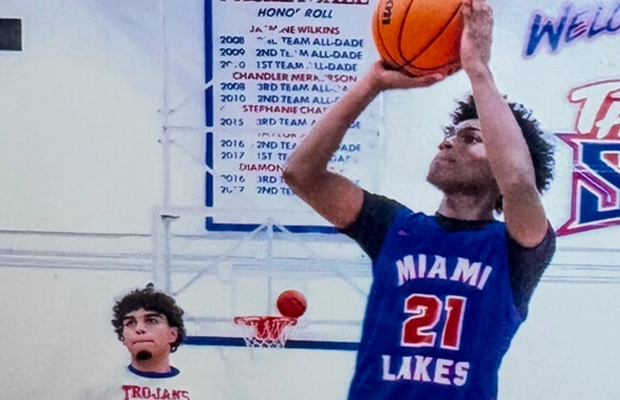
On April 21, 2025, Neamiah Johnson was just 18 years old—one of four siblings, the varsity basketball captain at Hialeah-Miami Lakes Senior High School, and newly enlisted in the Marines. With prom and graduation just a month away, his future was wide open.
But at 9 p.m. that evening, his life changed in an instant.
While helping clean out his mother’s car, Johnson was shot four times in a drive-by shooting. His family thinks it was a case of mistaken identity, but no arrests have been made.
“With that first bullet, I screamed and just fell to the ground,” Johnson said. “My mom ran outside, and I just told her, ‘I can’t feel my legs.’”
Johnson never lost consciousness. As he waited for the ambulance, he remembers his neighbors gathering around him, praying.
He was transported to Ryder Trauma Center at Jackson Memorial Hospital, where a multidisciplinary team was ready to act.
“He was unable to move his legs, which immediately told us he likely suffered a spinal cord injury,” said Julie Valenzuela, MD, a trauma surgeon at Ryder Trauma. “These can be long-term, devastating injuries.”
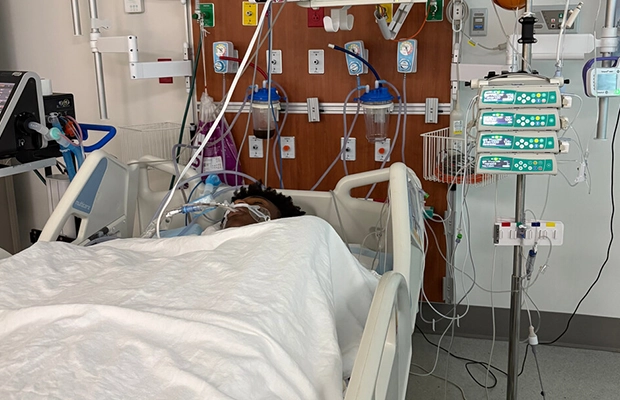
Johnson was rushed into emergency surgery. Doctors identified a tear in his liver, injuries to his right lung, and blood in his chest. Following surgery, he was admitted to Jackson Memorial’s intensive care unit (ICU), where he was closely monitored.
Dr. Valenzuela also serves as the medical director of Jackson’s Hospital-Based Violence Intervention Program, which supports patients affected by community violence.
“The goal is to intervene at a very vulnerable point in their recovery,” she said. “That way, we provide a sense of safety, support, and connect them with the services they will need moving forward.”
Dr. Valenzuela works closely with Kawanakee Thompkins, the program’s lead social worker, to ensure patients, like Johnson, and their families receive comprehensive support.
“This incident occurred at their home, so their sense of safety was completely shaken,” Thompkins said. “Our program was able to provide safe housing for Neamiah, his mother, and his three siblings in a hotel until he was discharged from the hospital.”
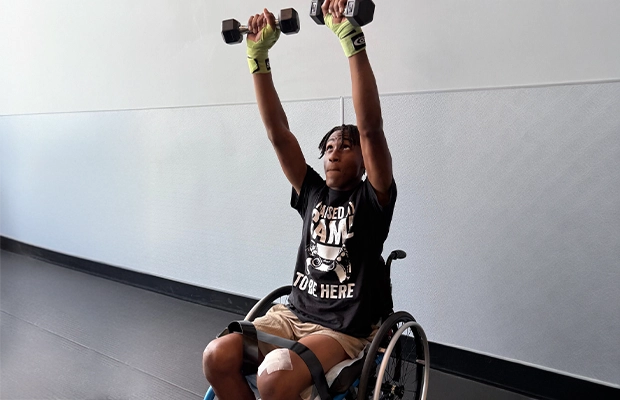
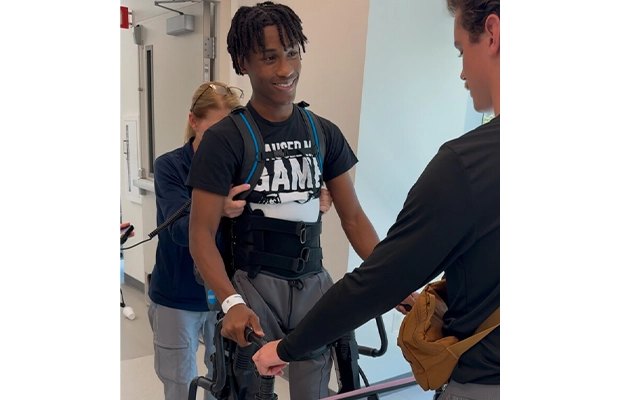
After his time in the ICU, Johnson was transferred to Christine E. Lynn Rehabilitation Center for The Miami Project to Cure Paralysis at UHealth/Jackson Memorial, where he began intensive rehabilitation.
“I first met Neamiah through his chart—a young patient coming in with a gunshot wound who was paralyzed,” said Logan Waller, one of Johnson’s physical therapists. “When I walked into the room, I expected someone very upset and distraught. But that’s not what I found.”
Instead, Waller was met with a patient determined to move forward.
“He was smiling, optimistic, already trying to sit up and move,” Waller said.
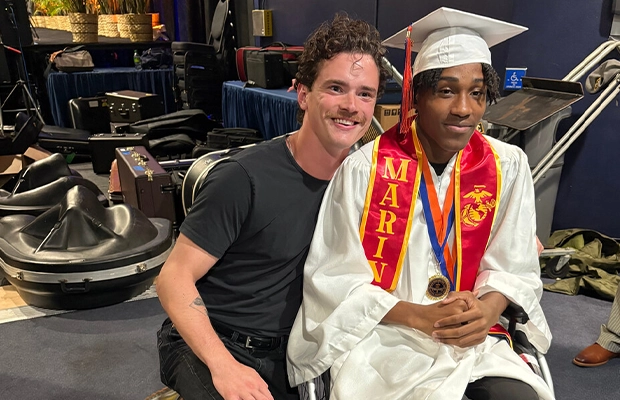
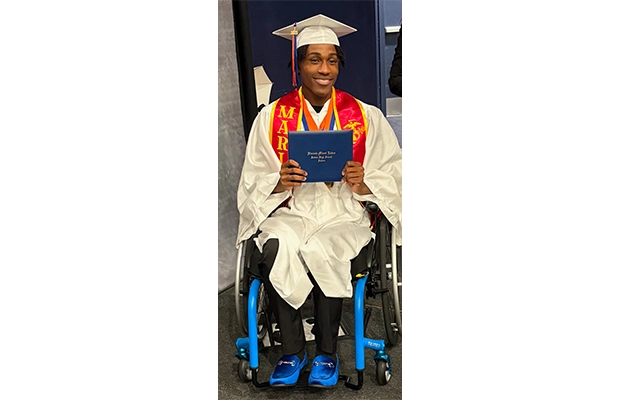
The rehabilitation team set a meaningful goal: to get Johnson home in time for his high school graduation. When that goal was met, Waller attended the ceremony and watched Johnson receive his diploma.
Looking ahead, Waller believes Johnson’s potential remains limitless.
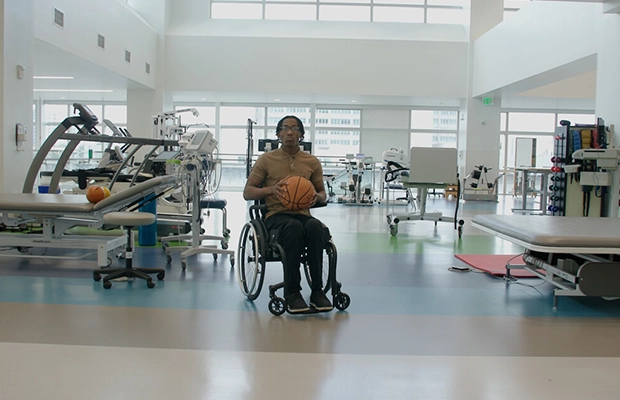
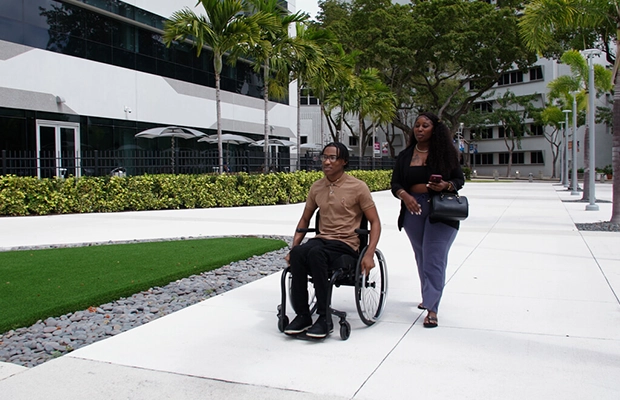
“In terms of the future, the chair changes nothing,” he said. “He still wants to pursue basketball in some form, and whatever path he chooses, he’s going to excel.”
If you ask the now 19-year-old where he sees himself in the future, his answer comes without hesitation.
“I see myself on a billboard, on a talk show, a TED Talk,” Johnson said with a smile. “Every situation, no matter if it’s good or bad, something good will come out of it.”
Now in college studying psychology, Johnson says he’s slowly reclaiming the life he once thought was out of reach.
“Everything I thought I wasn’t going to have, I’m just getting it back—just slowly falling into place,” he said. “Driving again, going everywhere I would like to go.
A big part of that is my mom—she helps me with everything.”
He also credits his care team at Jackson for shaping not only his recovery, but his attitude.
“This is an amazing hospital—they really played a part in how my mindset is,” Johnson said. “They saved my life. I’m just blessed for everybody.”
For Dr. Valenzuela and the team who cared for him, Johnson’s journey has left a lasting impression.
“We were all so impressed by his vitality and resilience,” she said. “I have yet to see someone his age with such maturity in his approach and understanding of his injury. He truly reminds us why we do what we do—and helps us be better, not just as caregivers, but as people.”