From Stroke to Strength: A Jackson Memorial Hospital Employee’s Road to Recovery
By Carla Palmer
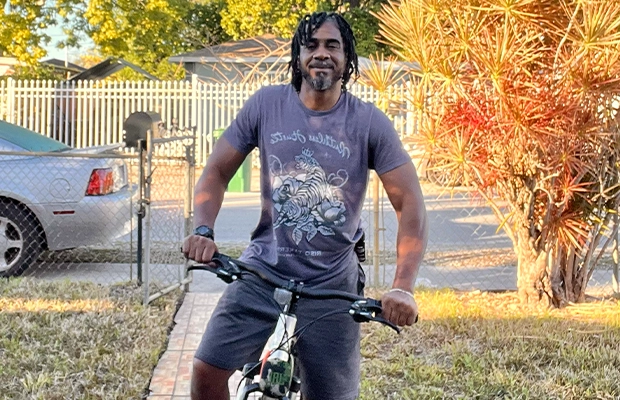
For more than 25 years, Sean Riley has supported Jackson Memorial Hospital in a variety of roles — from mental health to landscaping — today, he works in supply chain, helping ensure the hospital has what it needs to care for patients. His routine was simple: a 15-minute scooter ride to work, followed by a short walk to his office — located, as it would turn out, just beneath Ryder Trauma Center at Jackson Memorial.
On June 30, 2025, that routine was suddenly interrupted.
After three days of feeling dizzy and not himself, Riley woke up on a Monday morning planning to go to work as usual. Over the weekend, he had fallen off his scooter while riding with friends at a slow speed, brushing it off as dehydration. But when his symptoms didn’t improve, he made a small but crucial decision: instead of riding his scooter, he drove the less than 10 minutes to the hospital “just in case.”
As soon as he walked inside, Riley noticed something was very wrong. He kept drifting to one side, and the room felt like it was spinning. His supervisor immediately recognized the signs and had him admitted for testing.
The diagnosis: ischemic stroke.
An ischemic stroke happens when a blood vessel in the brain becomes blocked, cutting off the blood supply. It accounts for about 87 percent of cases, making it the most common stroke type.
“I had damaged nerve endings on the right side of my brain, which caused loss of function on the left side of my body,” Riley said.
Soon after arriving at Jackson Memorial, he began losing feeling on the left side of his body — just the beginning of a long recovery journey.
“I almost completely lost all function on my left side. I couldn’t move my leg, my foot, my arm,” Riley said. “You know it’s there, but you can’t do anything with it.”
Doctors treated and monitored him closely for several days, managing his blood pressure and ensuring he wasn’t bleeding heavily before he could begin rehabilitation. On the third day, he was transferred to Christine E. Lynn Rehabilitation Center for The Miami Project to Cure Paralysis at UHealth/Jackson Memorial, where his recovery officially began.
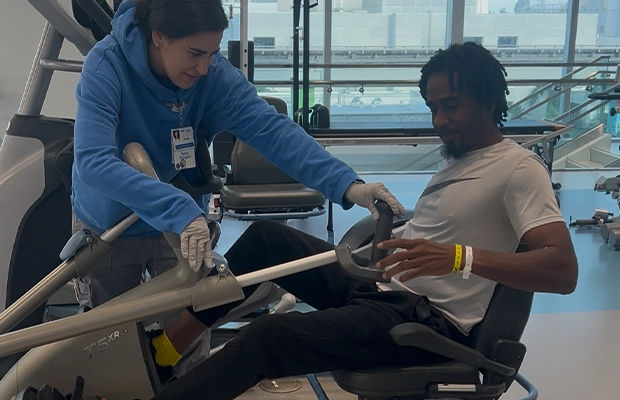
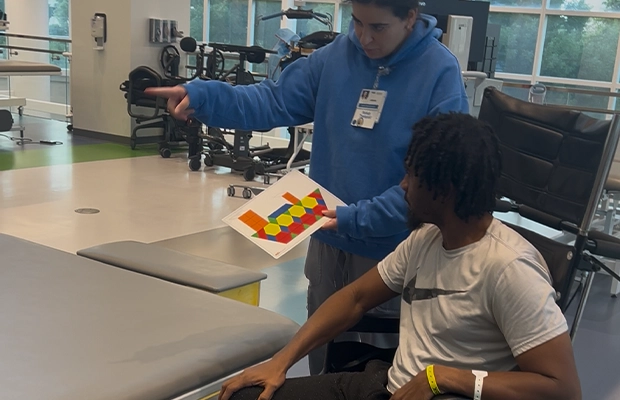
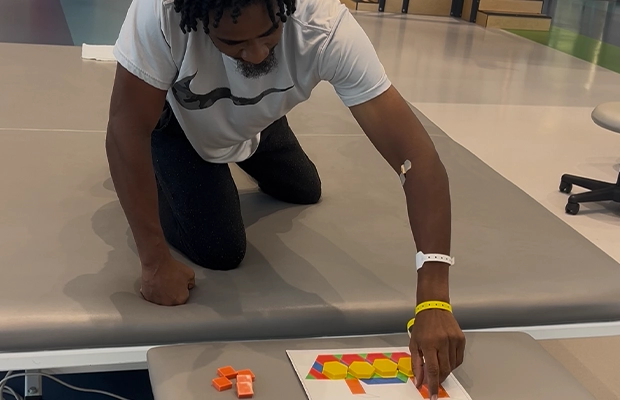
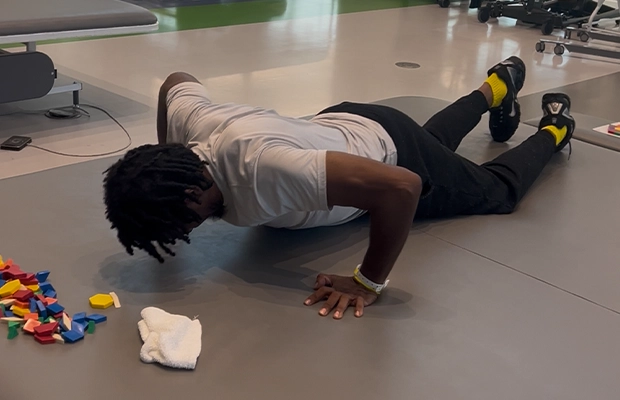
There, Riley worked with occupational and physical therapists Monday through Friday, determined to regain his movement.
“Sean came in with a lot of energy, which is very difficult to have at this stage,” said Ariana Gutierrez, Riley’s occupational therapist. “I went in every morning at 7:30 a.m. — most of my patients don’t want to wake up that early — but he was already ready to go. We were the first people in the gym every day.”
When Riley first arrived, he couldn’t lift his arm over his head. Movements that once felt automatic had become impossible on the left side of his body. While his speech and facial movement were unaffected, Riley was determined to regain full function. He worked day and night with that goal in mind.
That dedication made all the difference.
“By the time he left inpatient rehab, I knew he was ready for outpatient therapy — and I knew he was going to excel,” Gutierrez said.
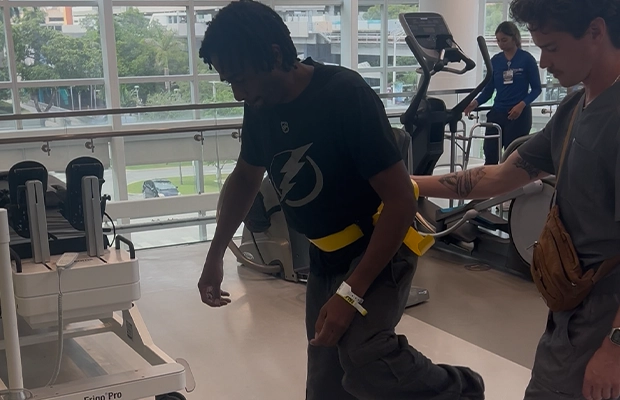
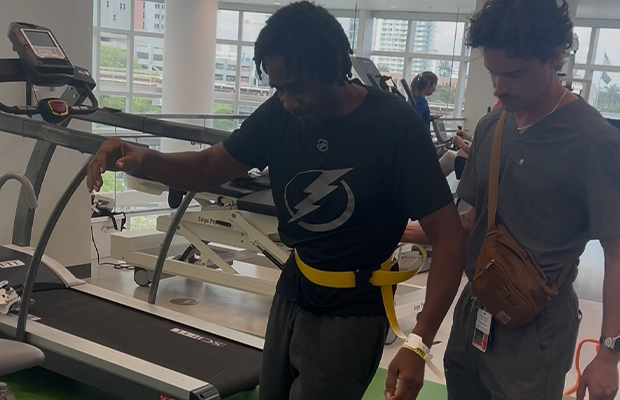
After discharge, Riley began outpatient therapy, working closely with Jill Munro and other physical therapists.
The focus shifted to rebuilding strength and endurance.
“When he came in, he wasn’t able to run or do many of the things he could do before,” Munro said. “We worked on strengthening, and eventually, he was able to jog on the treadmill at a pretty decent speed for long periods of time.”
His therapy included squats, step-ups, calf raises, leg presses, and other strength-building exercises.
“For every session I had with her, I would leave sweating,” Riley said. “She really helped bring me back.”
Both Munro and Gutierrez agree that what set Riley apart was his attitude.
“He’s a go-getter,” Munro said. “He did everything we asked him to do, he is a super motivated human.”
“Having the attitude Sean had makes all the difference,” Gutierrez added.
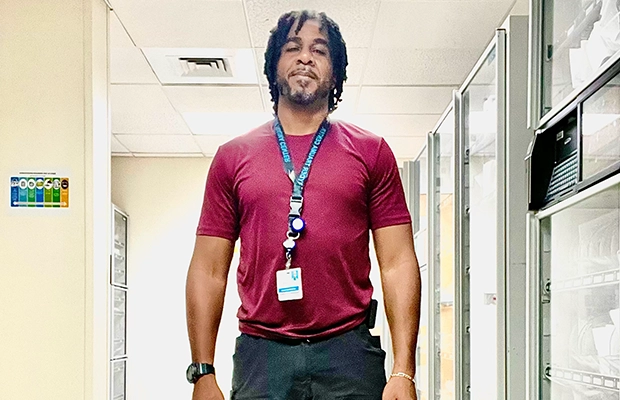
Today, Riley is back at work, once again walking the Jackson Memorial corridors — a testament to early recognition, comprehensive care, and his relentless determination.
“Everybody did what they were supposed to do to get me to where I’m at today,” Riley said. “I can be nothing but thankful.”